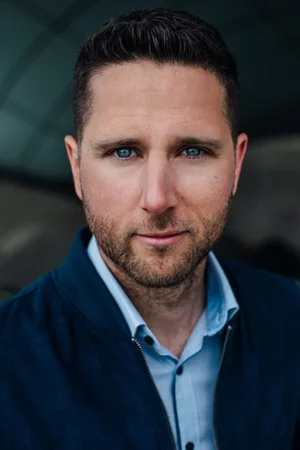

Europe’s Diversity is Not a Bug—It’s a Trillion-Euro Feature.
A conversation with Wemorrow founder Hannes Offenbacher on why the pandemic forced a new operating system for the continent, why he prefers smart networks over large office buildings, and why global investors are suddenly obsessed with the European mid-market.
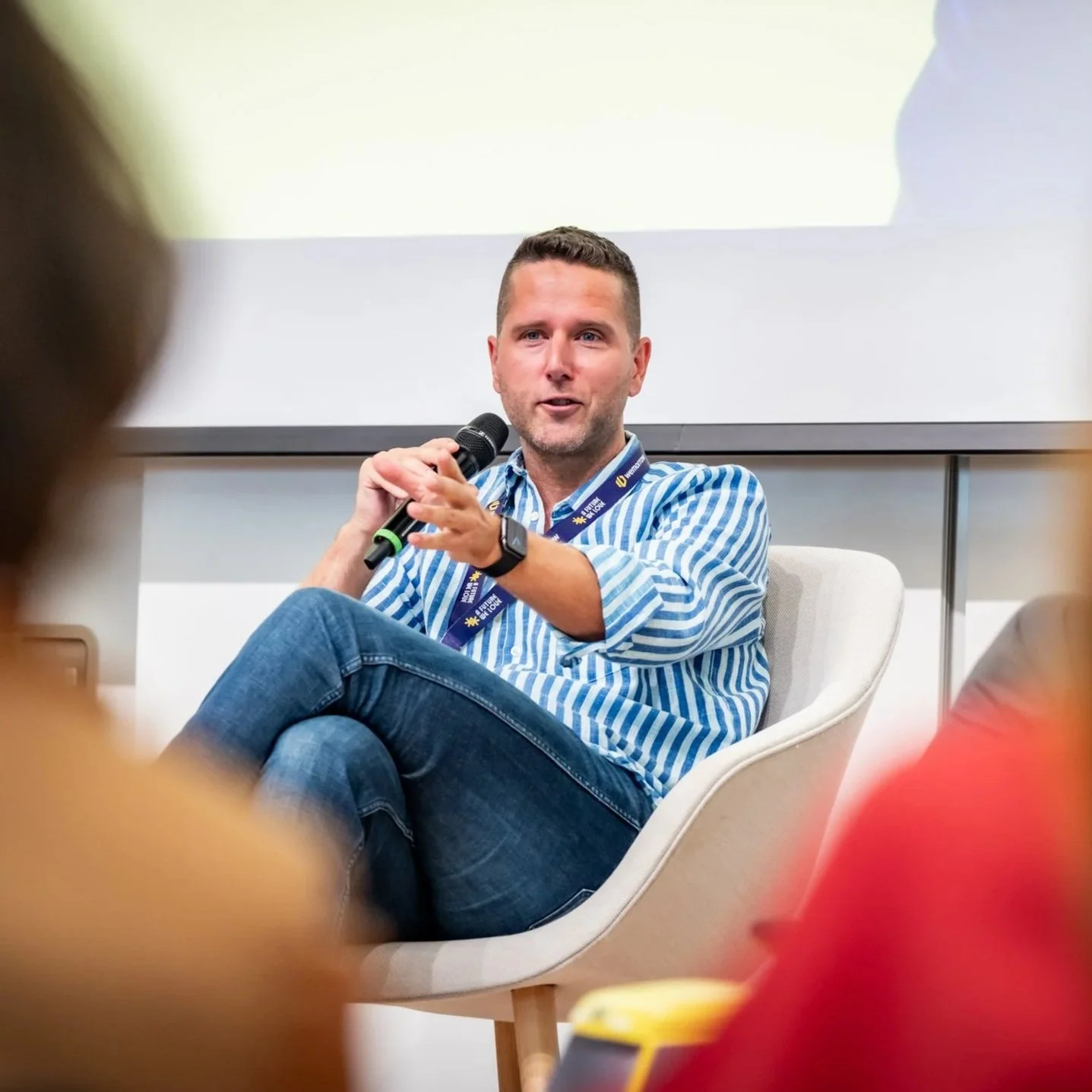
Q: Hannes, you now have partners in 12 EU countries. That sounds like you are building a massive traditional agency. Is Wemorrow trying to become the next big multinational consulting firm?
Hannes: Absolutely not. We are establishing a completely new category: a co-creating network organization. The old economy measured success by the number of employees and square meters of office space. To me, those are just "dumb offices"—expensive containers for isolated thinking. We measure success by the density and quality of our connections. We act smart through deep collaboration, not through heavy infrastructure. We don't need a glass headquarters in every capital; we need the right access to the right minds. We are agile, decentralized, and hyper-connected.
Q: Let’s go back to the beginning. The name "Wemorrow" sounds optimistic, but it was born in a rather dark time, wasn't it?
Hannes: It was born precisely because it was dark. It was after the first hard lockdowns of the Covid pandemic. The streets were empty, the factories quiet, and the traditional associations were paralyzed by shock. The silence was deafening. We realized: The old systems don't work when the plug is pulled. "Wemorrow"—We and Tomorrow—was our answer to that paralysis. It wasn't a marketing gimmick; it was an act of defiance. We decided that when the world turns back on, we can't just go back to "business as usual." We needed a new operating system based on collaboration.
Q: You are very specific about who you work with. You strictly refuse to work with early-stage startups. Is that arrogance or strategy?
Hannes: It’s pure pragmatism. I love the energy of a garage founder, but Wemorrow is not a kindergarten for ideas. We connect the European mid-market—companies with turnover, employees, and real production lines. They cannot afford to play with "experiments." We only work with Scale-ups—companies that have a Proof of Concept and a proven market fit. When we introduce a partner to a Hidden Champion, that solution must work immediately, not in three years. We don't sell hope; we sell impact.
Q: Why this strict filter?
Hannes: Because trust is our currency. If I send a charming founder with a PowerPoint presentation but no working product to a CEO in the Black Forest, Germany, and the project fails, I’ve burned that bridge forever. But if I bring a Scale-up that has already proven it can reduce energy costs by 20%, I’m not just a networker; I’m a value creator. We are the filter that separates the "nice to haves" from the "game changers."
Q: Let’s talk about geography. You aren’t targeting the whole world at once. What is the logic behind Phase 1?
Hannes: Focus. We started with what makes logical sense: The direct neighbors of the DACH region, because our economies are intertwined like DNA strands. Then, we deliberately looked North and South. The Scandinavian countries because they are usually five years ahead in digitalization, and the Mediterranean countries—Spain, France, Portugal, Greece—because they bring a creativity and resilience that we desperately need. It’s a strategic pincer movement: Northern efficiency meets Southern agility, centered around the industrial heart of Central Europe.
Q: That sounds like a cultural clash waiting to happen. Can a Greek Scale-up really help an Austrian manufacturer?
Hannes: Better than you think. The Austrian manufacturer is often stuck in perfectionism. The Greek or Portuguese partner has learned to deliver world-class results with limited resources during years of economic pressure. That is a superpower. When we bring these sides together, the Austrian learns agility, and the Southern partner gains scale. It’s not a clash; it’s the missing puzzle piece. Diversity isn't a bug in the European system; it's our biggest competitive advantage.
Q: Speaking of scale—you’re seeing a massive increase in inquiries from global investors. Why are they suddenly turning to Wemorrow?
Hannes: Because the era of hype is over. Smart money is looking for substance, and Europe is the global powerhouse for sustainable transformation. International investors see that Europe's regulatory framework—the Green Deal, ESG requirements—is creating a massive market for green technology. But for an investor from New York or Singapore, Europe is a black box. It’s fragmented by language and culture. They can’t find the deals. We act as their scout. We show them: "Here is a profitable manufacturer in Bavaria, Germany, decarbonizing its supply chain with a scale-up from Sweden." That is an investable reality, not a digital fantasy.
Q: Looking at this "Phase 1" map—Scandinavia, DACH, the Mediterranean—what is the ultimate goal?
Hannes: To unlock a sleeping giant. Europe has always had the talent and the industrial base, but it lacked the connection. If we can get the Norwegian software engineer, the German machine builder, and the Spanish energy expert to work on one project—in English, using AI translation, without friction—then we have created an economic force that no single nation can match. We are building the infrastructure for a united economic Europe, one Scale-up match at a time.
+ connect
Hannes Offenbacher is entrepreneur, disruptive fictionist
and president of Wemorrow.
+ connect with Hannes on linkedin
+ follow Hannes on instagram